Do you snore loudly, wake up gasping for air, or feel exhausted despite a full night in bed? These are common signs of obstructive sleep apnea (OSA), a serious condition where breathing repeatedly stops and starts during sleep. Millions of OSA cases go undiagnosed each year, increasing the risk of significant health problems.
Fortunately, diagnosing sleep apnea is more accessible than ever. An at-home sleep study, also known as a home sleep apnea test (HSAT), offers a convenient and effective alternative to traditional in-lab testing. As a leading virtual sleep clinic, Sleep Reset provides medical-grade home sleep tests to help you get clear answers about your sleep health from the comfort of your own bed. This guide explains how at-home sleep studies work, their benefits, and their limitations.
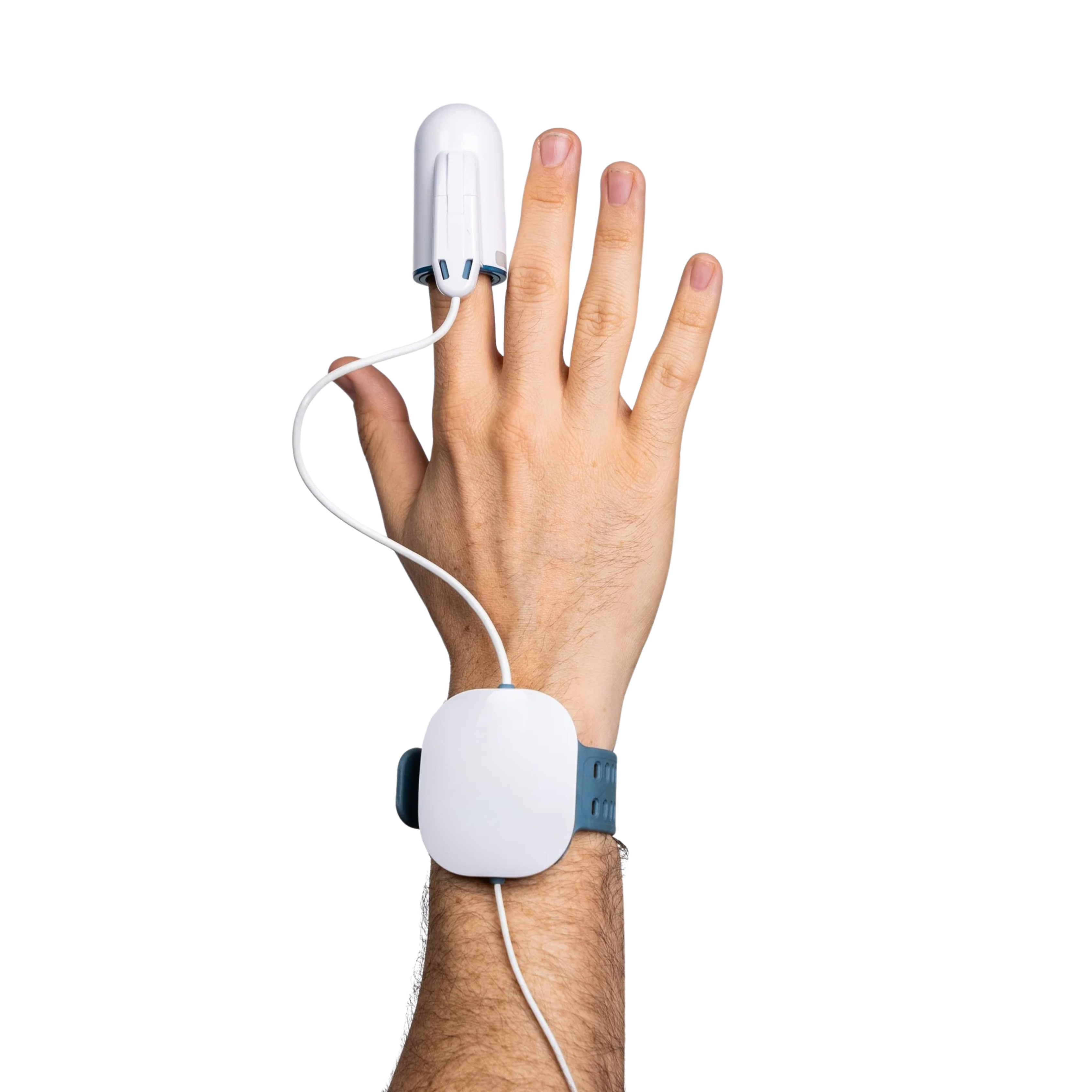
An at-home sleep study is a diagnostic tool that uses a simple, wearable device to monitor your sleep and screen for obstructive sleep apnea. As you sleep, the device tracks key physiological metrics to detect and count breathing interruptions, known as apneas and hypopneas. The collected data is then analyzed by a board-certified sleep physician to determine if you have OSA and to assess its severity.
Sleep studies are categorized into different types based on the data they collect.
An at-home sleep test kit includes several simple sensors you wear overnight. The exact components vary, but most modern tests, including the one from Sleep Reset, involve:
The process is designed to be straightforward and minimally disruptive.
A home sleep test is designed to capture the essential data needed to diagnose sleep-disordered breathing. The key metrics include:
Compared to in-lab polysomnography, at-home tests offer several significant advantages.
Sleeping in your own bed is far more comfortable and natural than sleeping in an unfamiliar lab while being monitored. This often leads to a more typical night of sleep, which can produce more representative test results.
An at-home test eliminates the need to schedule an overnight stay at a sleep center, take time off work, or travel. The entire process, from ordering the test to receiving results, is handled from home.
Home sleep tests are significantly more affordable than in-lab studies. While a polysomnography can cost between $1,000 and $5,000, an at-home test typically costs between $150 and $500. Sleep Reset offers its complete, physician-reviewed at-home sleep study for $189.
Sleep clinics often have long waitlists for in-lab studies. With an at-home test, you can get a diagnosis and start treatment in a matter of days, not weeks or months.
While HSATs are an excellent tool, they have a few limitations.
Home tests are designed specifically to screen for obstructive sleep apnea. Because they do not measure brain activity (EEG), they cannot diagnose other complex sleep disorders like narcolepsy, restless legs syndrome, or parasomnias.
While highly accurate for diagnosing moderate to severe OSA, home tests can sometimes under-diagnose or miss mild cases. An HSAT measures respiratory events over the total recording time, not the actual time spent asleep, which can sometimes slightly lower the calculated severity index.
Since a technician is not present, there's a small chance a sensor could become dislodged during the night. However, modern devices come with simple, clear instructions to minimize user error.
Choosing between a home test and an in-lab study depends on your symptoms and overall health.
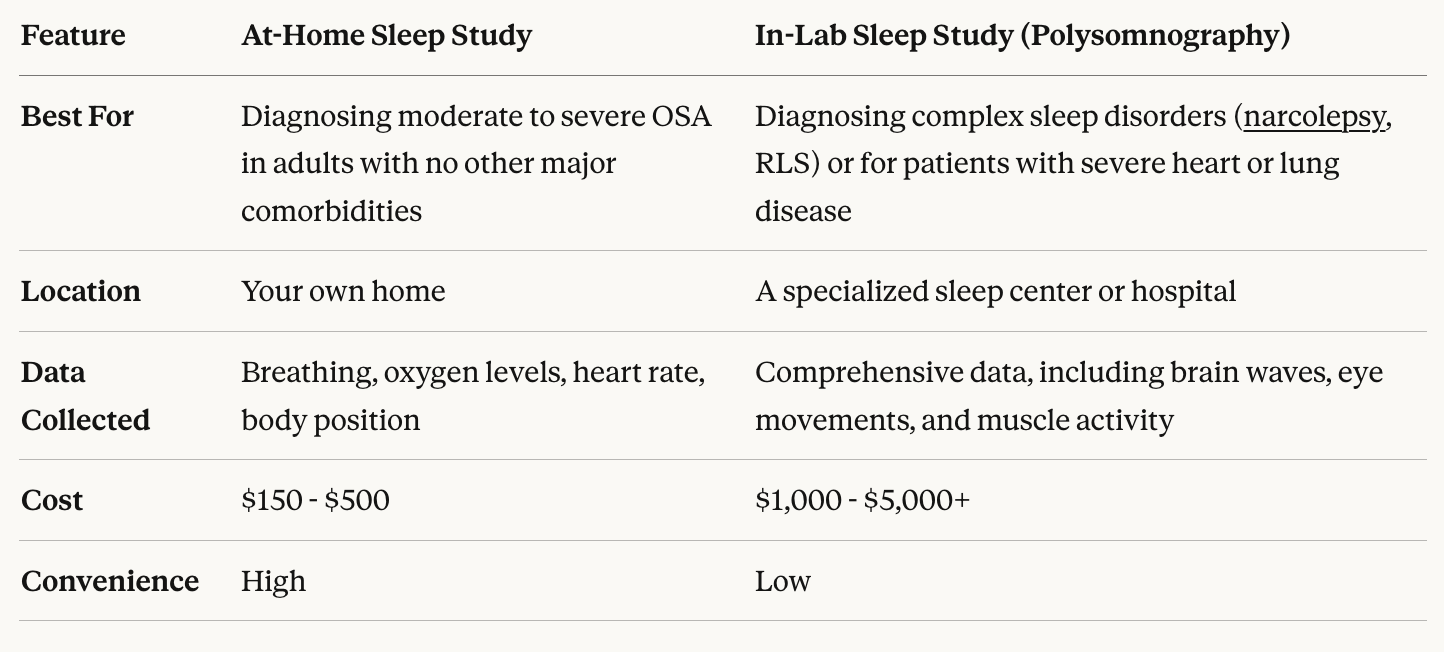
An at-home sleep test is the right choice for most people who suspect they have obstructive sleep apnea. If your results are inconclusive or if your healthcare provider suspects a different sleep disorder, an in-lab study may be recommended as a next step.
If you're tired of feeling tired, it's time to get answers. Sleep Reset makes it easy to take control of your sleep health. Our virtual sleep clinic provides access to medical-grade care, including our simple and affordable at-home sleep study.
With a physician-interpreted report and clear guidance on next steps, you'll have the information you need to address the root cause of your sleep issues. Whether it's sleep apnea or another issue like insomnia, Sleep Reset offers personalized, science-backed programs to help you finally get the restorative sleep you deserve.
Looking for sleep treatment in your area? Sleep Reset provides coverage across the United States, including California, Texas, New York, Florida, Illinois, and many other states.
Take our quiz to see if Sleep Reset is right for you, or learn more about our approach to treating sleep disorders naturally.
.png)
Dr. Neel Tapryal
Dr. Neel Tapryal is a medical doctor with extensive experience helping patients achieve lasting health and wellness. He earned his medical degree (MBBS) and has worked across hospital and primary care settings, gaining expertise in integrative and preventive medicine. Dr. Tapryal focuses on identifying and addressing the root causes of chronic conditions, incorporating metabolic health, sleep, stress, and nutrition into personalized care plans. Driven by a passion for empowering patients to take control of their health, he is committed to helping people live with greater energy and resilience. In his free time, he enjoys traveling, outdoor adventures, and spending time with family and friends.

Fax: +1 (984) 888-8385
Email: help@thesleepreset.com