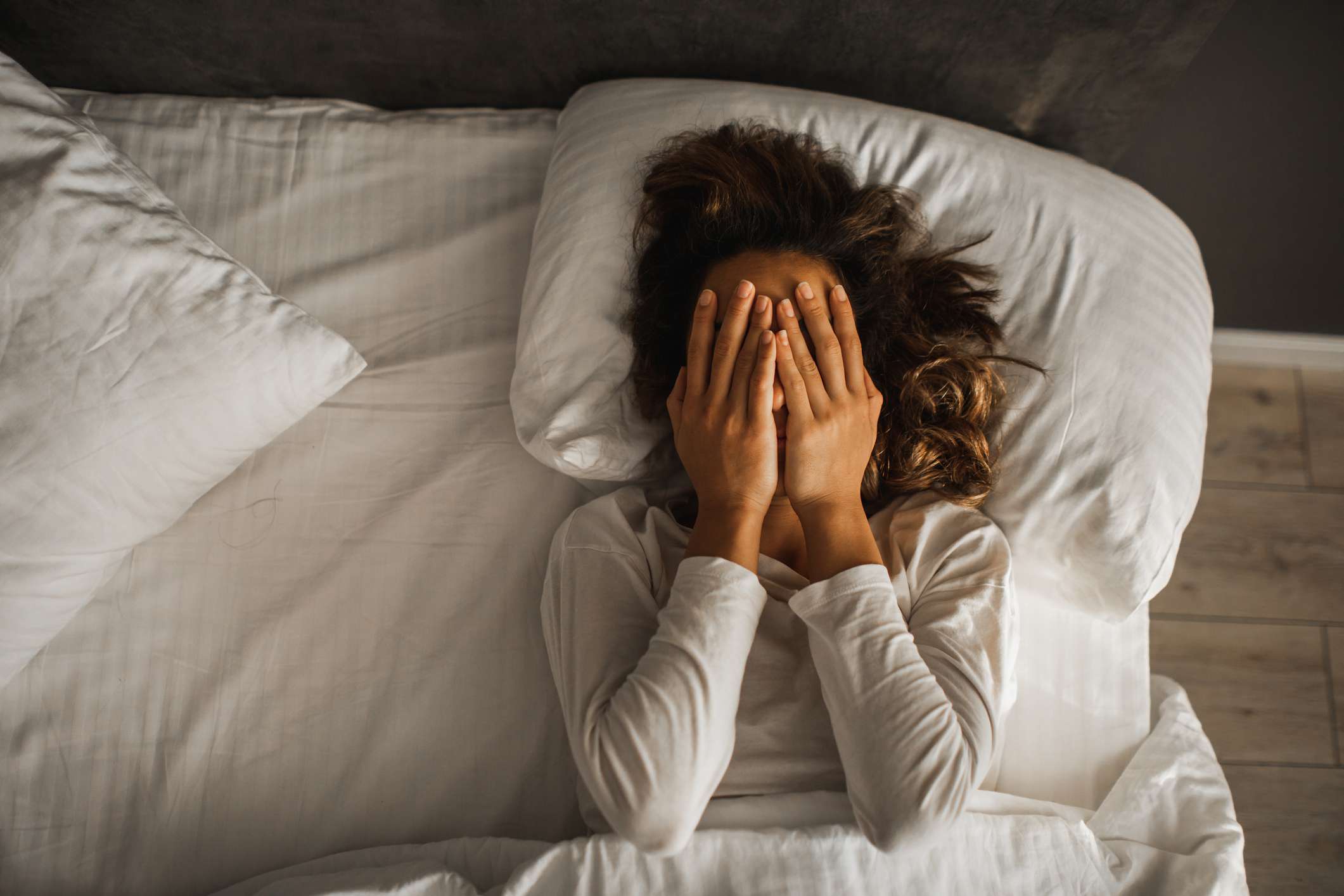
Can't sleep? So you worry about not sleeping. Which makes sleeping even harder. Now you're anxious about being anxious.
Frustrating doesn't even begin to cover it. This pattern shows up in 40% of people with chronic insomnia, and it's not just coincidence. Sleep anxiety and insomnia don't just coexist—they're basically feeding off each other in this vicious loop that feels impossible to escape.
Your anxiety messes with your sleep. Then your terrible sleep ramps up your anxiety. Understanding how they're connected? That's where you start breaking free.
It's pretty straightforward. Sleep anxiety is being afraid of sleep itself. Not anxiety about life stuff—this is specifically freaking out about whether you'll actually be able to fall asleep or stay asleep.
People with sleep anxiety obsess over the act of sleeping. Bedtime approaches and their minds start racing. Bodies get tense. Creates this heightened arousal state before bedtime that basically guarantees sleep won't happen.
The science backs it up too. Studies show elevated cortisol in folks with pre-sleep anxiety. Cortisol's your stress hormone—supposed to be low at night. High cortisol? It literally blocks your natural sleep drive.
What's this actually look like? Some people start dreading bedtime hours in advance. Others lie there wide awake, hyper-focused on not sleeping. Lots of clock-watching, mental calculations about how little sleep they're gonna get. And here's the kicker: that monitoring behavior makes insomnia worse.
We asked Dr. Suzanne Gorovoy, Clinical Psychologist and Behavioral Sleep Medicine Specialist, about sleep anxiety patterns. She says: "The anticipatory fear creates the exact conditions that prevent sleep." Your bed becomes a stress zone instead of a rest zone.
If you're dealing with these symptoms, conquering sleep anxiety means tackling the thoughts plus the behaviors keeping this cycle alive.
These two don't just happen together. They make each other worse. Actively.
Check this out: insomnia increases anxiety risk by 17-fold. Yeah, seventeen times higher risk. Anxiety disorders? They triple your odds of developing chronic insomnia. It goes both directions, and the connection's pretty intense.
Poor sleep basically hijacks your brain's emotion centers. Your amygdala—that's your fear center—goes into overdrive. Meanwhile your prefrontal cortex, which usually keeps emotions in check, kinda loses control. Result? You react way more strongly to stress and can't calm yourself down. Neuroimaging studies actually show that one bad night amplifies emotional reactivity by 60%. Sixty percent!
Then there's what anxiety does. Triggers your fight-or-flight response. Heart rate spikes. Stress hormones everywhere. This whole arousal state prevents sleep from starting and ruins sleep quality even when you do drift off.
The cycle doesn't stop. Bad night equals more anxiety. More anxiety guarantees another bad night. Without treatment? This can go on for years. Tons of people with chronic insomnia end up saying the anxiety about sleep got bigger than whatever started the sleep problem in the first place.
The connection works through specific biological systems. Once you get these mechanisms, the whole anxiety-insomnia thing starts making way more sense.
Your HPA axis (hypothalamic-pituitary-adrenal axis, if you wanna get technical) controls stress response. People with sleep anxiety? This system goes haywire.
Research shows sustained cortisol elevation in chronic insomnia patients, especially during evening hours. That high cortisol blocks melatonin and messes up normal sleep architecture.
This is basically the hallmark of both anxiety and insomnia. Studies measuring metabolic rate during sleep found insomnia patients running higher than good sleepers.
Shows up as increased heart rate variability, higher body temp, faster brain waves. Nervous system can't downshift enough for deep sleep.
We asked Dr. Michael Grandner, Professor of Neuroscience and Physiological Sciences, about physiological arousal. He says: "The body prepares for threat when it should be resting." Creates massive sleep disruption.
Mental hyperarousal makes the physical stuff worse. Intrusive thoughts and worry—they're central to both conditions.
Brain scans show increased activity in executive function areas during the sleep transition. Minds stay busy problem-solving when they should be powering down. Triggers more physiological arousal, generates more anxious thoughts. Loop keeps running, creating fragmented sleep or no sleep at all.
Sleep deprivation wrecks your anxiety regulation. Even one lousy night cranks up anxiety symptoms the next day.
Sleep deprivation knocks down activity in the medial prefrontal cortex—that's your brain's emotion regulator. Same time, it amps up your amygdala. So you're getting stronger emotional reactions with less ability to handle them.
Chronic sleep loss drains neurotransmitters needed for mood regulation. Serotonin and GABA levels drop with ongoing sleep restriction. When they're depleted, anxiety symptoms intensify.
Sleep loss also changes how you read situations. Studies show sleep-deprived people see threat in neutral facial expressions. They're wired to spot danger everywhere.
For folks already battling sleep maintenance insomnia, this heightened anxiety throws up more barriers to staying asleep.
There's this landmark study that tracked 2,316 adults over 12 months looking at the anxiety-insomnia relationship.
Baseline insomnia predicted new-onset anxiety in 14% of participants who'd never had anxiety before. So having insomnia put you at real risk for developing anxiety down the line.
They used objective sleep measures plus validated anxiety assessments. Turns out difficulty falling asleep had the strongest link to developing anxiety. People taking 45+ minutes to fall asleep? Triple the risk compared to folks who conked out within 15 minutes.
But here's the really important part: treating insomnia reduced anxiety symptoms—even without any anxiety-specific treatment. Participants who fixed their insomnia through CBT-I saw a 45% drop in anxiety symptoms at the six-month mark. Fix the sleep problem, anxiety improves. Pretty straightforward.
Treating this connection means hitting both problems at once. Going after just one leaves half the cycle running.
CBT-I's the go-to treatment for insomnia plus anxiety. Research shows CBT-I tackles both sleep problems and anxiety symptoms simultaneously.
Treatment's got several pieces. Sleep restriction therapy tightens up sleep by temporarily cutting time in bed. Builds your sleep drive, reduces those anxiety-filled hours lying awake. Stimulus control helps you link your bed with sleep again.
Then cognitive therapy goes after the worry thoughts fueling sleep anxiety. You learn to catch and challenge catastrophic thinking. Most people figure out their fears about sleep consequences are way overblown. Cuts down that anticipatory anxiety.
We asked Dr. Daniel Jin Blum, Clinical Psychologist and Research Assistant Professor of Psychology, about CBT-I effectiveness. He says: "Addressing sleep directly resolves associated anxiety without separate intervention." Makes CBT-I super valuable for folks dealing with both.
Programs like Sleep Reset deliver CBT-I through digital platforms.
Progressive muscle relaxation, diaphragmatic breathing, guided imagery—these dial down physiological arousal. Studies show they lower heart rate and cortisol when you practice before bed.
These work by flipping on your parasympathetic nervous system—rest-and-digest mode. Regular practice trains your body to shift from arousal to relaxation easier. Lots of folks find establishing a wind-down routine with these techniques really helps.
Meds play a pretty limited role here. Sleep aids might help short-term, but they don't fix underlying issues plus there's dependence risk.
Evidence shows combining medication with CBT-I beats medication alone long-term. Understanding melatonin vs prescription sleep aids helps with treatment decisions.
A few modifiable things affect both anxiety and sleep. Addressing these supports recovery.
Physical activity cuts anxiety and improves sleep. Meta-analyses show exercise shortens sleep onset latency and bumps up total sleep time.
Timing matters though. Morning or afternoon workouts work best. Late evening exercise can amp up arousal in some folks. Finding what works for your body is key.
Both mess with the anxiety-sleep connection. Caffeine jacks up physiological arousal and triggers anxiety. Research shows caffeine six hours before bed cuts total sleep time by over an hour.
Alcohol seems helpful for sleep anxiety. It's not. Actually worsens sleep quality, fragments sleep, intensifies next-day anxiety.
Keeping regular sleep and wake times stabilizes circadian rhythms. Cuts both anxiety and insomnia symptoms. Studies show irregular sleep schedules predict worse anxiety.
Even weekends, stay within an hour of your usual schedule. The predictability dials down anticipatory anxiety while supporting sleep drive. Sleep calculators help figure out optimal timing.
Some situations need pro help. If sleep anxiety or insomnia hang around despite self-help efforts, or if they're really messing with daily life, it's time for professional treatment.
Warning signs:
Finding the right care usually means trying a few providers. Lots of folks do great with self-guided CBT-I programs that deliver professional-level help at home.
Sleep anxiety and insomnia feed off each other through biological, cognitive, and behavioral pathways. Strong connection, but not permanent.
CBT-I hits both conditions. Targets the thoughts and behaviors keeping the loop alive. Most people see real improvement within weeks.
Lifestyle stuff supports recovery—regular exercise, consistent sleep times, smart handling of caffeine and alcohol.
The two-way nature means fixing one helps the other. Focus on sleep and anxiety drops. Makes sleep-focused treatment a smart starting point.
Sleep Reset's approach blends clinical expertise with easy access, helping thousands break the anxiety-insomnia cycle.
The information in this article is based on peer-reviewed research and expert clinical opinion. It's intended for educational purposes and shouldn't replace advice from healthcare providers. If you're struggling with sleep anxiety or insomnia, consider consulting a sleep medicine specialist or behavioral sleep medicine psychologist for personalized evaluation and treatment.
.png)
Dr. Neel Tapryal
Dr. Neel Tapryal is a medical doctor with extensive experience helping patients achieve lasting health and wellness. He earned his medical degree (MBBS) and has worked across hospital and primary care settings, gaining expertise in integrative and preventive medicine. Dr. Tapryal focuses on identifying and addressing the root causes of chronic conditions, incorporating metabolic health, sleep, stress, and nutrition into personalized care plans. Driven by a passion for empowering patients to take control of their health, he is committed to helping people live with greater energy and resilience. In his free time, he enjoys traveling, outdoor adventures, and spending time with family and friends.

Fax: +1 (984) 888-8385
Email: help@thesleepreset.com