You made it through today. Emails answered. Meetings survived. Decisions made.
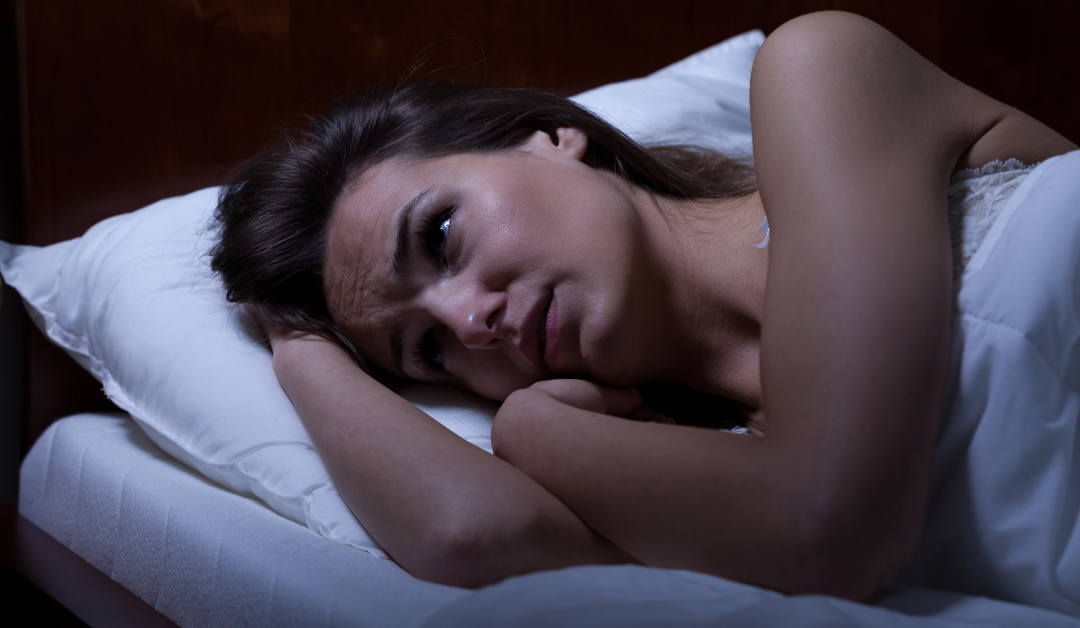
Now you're in bed.
That's when your brain decides to lose it. Heart pounding. Mind racing. Every worry from earlier? Suddenly feels catastrophic.
There's actual science here. Your brain processes anxiety differently at night—not just "stress at bedtime." The biology behind why 11 PM panic hits different than daytime worry is pretty wild.
The prefrontal cortex? That's your rational thinking center. Turns out it gets less active after sunset.
Your ability to tell yourself "this isn't a big deal" clocks out before you do.
During the day you've got constant input. Screens. Conversations. Tasks piling up. All that external noise keeps your brain occupied. But night comes and suddenly there's nothing to distract you from what's happening inside your body. You notice your heartbeat. Every sensation amplified. That chest tightness you ignored at 2 PM becomes "am I having a heart attack?" at 2 AM.
We asked Dr. Michael Grandner, Professor of Neuroscience and Physiological Sciences, about this. He says: "Evening hours reduce executive function that normally regulates worry."
Your mental toolkit for handling anxiety calls it quits before bedtime. You're trying to manage anxiety with reduced cognitive resources.
Your arousal systems respond more intensely to threats at night. The sympathetic nervous system—fight-or-flight mode—triggers easier. Anxiety creates physical symptoms. Physical symptoms create more anxiety. Round and round.
Normally? Cortisol peaks when you wake up. Drops throughout the day.
Chronic stress throws this completely off. Your cortisol stays high at night. High cortisol means your body thinks it needs to stay alert. You're getting a biological alarm signal when trying to wind down.
Research shows abnormal cortisol patterns in people with anxiety disorders. Consistently. The pattern shows up repeatedly across studies.
Your internal clock—when it expects sleep but you're awake—increases anxiety sensitivity. The mismatch matters. Your body has expectations about when certain biological processes should happen.
Light exposure plays a role. Not getting enough bright light during the day weakens circadian signals. The same mechanism that should help you wind down? Can backfire. Increase anxiety instead, especially when sleep doesn't come quickly.
Understanding circadian rhythms helps explain timing. Most people experience anxiety peaks between 10 PM and 2 AM. That window when sleep pressure builds but your nervous system stays aroused.
No visual distractions in darkness. You become hyperaware of internal sensations. Heartbeat. That twinge. Everything amplified, especially if you're prone to health anxiety. Your attention has nowhere else to go.
Rumination loves nighttime. Repetitive negative thinking increases during pre-sleep periods—nothing interrupts the loops. You replay conversations. Anticipate problems. Catastrophize without those natural daytime breaks. Every worry branches into three more worries.
We asked Dr. Suzanne Gorovoy, Clinical Psychologist and Behavioral Sleep Medicine Specialist, about this. She says: "Pre-sleep worry activates the same neural pathways as daytime anxiety."
But here's the difference. Can't call anyone. Can't take action. Can't get reassurance. Just you and the thoughts with zero options for relief.
Problem-solving ability drops as the day progresses. You're trying to work through concerns with reduced cognitive tools.
Then there's the paradox. Trying harder to sleep increases arousal—exact opposite of what you need. Many people get trapped here, where anxiety about not sleeping becomes what prevents sleep.
Nature Human Behaviour published something fascinating in 2022. Researchers scanned people's brains during anxiety-provoking scenarios—same scenarios, different times of day.
Results? Pretty striking.
Nighttime anxiety lit up the amygdala way more intensely—that's your fear center. Meanwhile, the ventromedial prefrontal cortex showed decreased activity. That region regulates emotions. So stronger fear plus weaker regulation. Not great.
The connection between amygdala and hippocampus increased during evening hours. Hippocampus handles memory retrieval, which explains why nighttime anxiety involves such vivid recall of every past failure or bad experience.
The default mode network showed hyperconnectivity in anxious individuals at night. Your brain's resting state becomes more prone to negative self-focused thinking after dark.
Bottom line from researchers? Nighttime anxiety is a distinct neurobiological state. Not just daytime anxiety happening later. This matters for treatment approaches because what works during the day might need tweaking for nighttime symptoms.
Insomnia and anxiety feed each other. Anxiety disrupts sleep. Poor sleep increases next-day anxiety. The cycle continues.
Sleep apnea's connection to anxiety isn't obvious to most people. Every breathing interruption triggers stress hormone release. You get physiological anxiety without any psychological trigger. Snoring, gasping, morning headaches? Breathing problems might be the real driver here.
We asked Dr. Areti Vassilopoulos, Pediatric Health Psychologist and Assistant Professor of Child Psychology, about this overlap. She says: "Undiagnosed sleep disorders often masquerade as primary anxiety disorders."
Patients get treated for anxiety alone. Keep struggling. Because the underlying sleep issue never gets addressed.
Waking up in the middle of the night—sleep maintenance insomnia—strongly correlates with anxiety. Brief arousals during natural sleep cycles? Anxiety transforms them into extended wake periods. That 3 AM wake-up super common among anxiety sufferers.
Restless leg syndrome adds another layer. Uncomfortable sensations. Constant need to move. Right when your body needs to wind down. The frustration amplifies anxious thoughts.
Heart palpitations feel different in darkness. Pre-sleep periods increase awareness of your heartbeat. Normal heart rate changes suddenly seem pathological. Health anxiety around nighttime cardiac sensations develops in many people. Every skip or flutter becomes evidence of impending doom.
Breathing changes. Anxiety-driven hyperventilation alters blood oxygen levels—dizziness, tingling, that "can't catch my breath" sensation. These symptoms fuel more anxiety. You start monitoring your breathing, which makes it harder to breathe naturally.
Teeth grinding correlates with anxiety severity. Jaw pain. Headaches from overnight clenching. This physical discomfort triggers middle-of-the-night anxiety.
Temperature regulation goes sideways. Anxiety activates sympathetic nervous system responses including temperature changes. Night sweats. Chills. Feeling too hot or cold—all potential anxiety responses. You kick off blankets, then freeze. Pull them back on, then overheat.
Stomach issues show up too. Nausea. Discomfort. Digestive weirdness. Nighttime quiet amplifies these sensations.
Cognitive behavioral therapy for insomnia—CBT-I—targets these exact mechanisms. Reduces both anxiety and sleep problems by changing thoughts and behaviors that perpetuate the cycle. Sleep Reset's program uses CBT-I principles designed for nighttime anxiety specifically.
Sleep compression seems backwards at first. Temporarily restrict time in bed to increase sleep pressure. Makes it harder for anxiety to prevent sleep onset. Retrains your brain: bed equals sleep, not worry.
Stimulus control. Lying there anxious for 20+ minutes? Get up. Leave the bedroom. Prevents your brain from associating bed with anxiety. Come back only when actually sleepy.
Schedule worry time earlier in the day. Designate 20 minutes in the afternoon for deliberate worrying. Reduces intrusive thoughts during sleep onset. Write worries down, then mentally file them for tomorrow's session.
Physiological calming techniques target the physical component. Progressive muscle relaxation. Diaphragmatic breathing. Body scans. These reduce sympathetic nervous system activity. Not forcing relaxation—allowing natural calming mechanisms.
Basic sleep hygiene sets conditions for lower anxiety. Cool room. Darkness. Minimal noise.
Light timing matters enormously. Bright morning light plus dim evening light strengthens circadian rhythms that reduce evening anxiety. Blue light blocking two hours before bed allows proper melatonin rise.
Exercise timing—at least 3-4 hours before bed. Arousal effects wear off while anxiety-reducing benefits remain.
Alcohol backfires despite seeming helpful. Disrupts sleep architecture, increases middle-of-the-night awakenings, often with anxiety. Caffeine after early afternoon same problem.
Medications exist. Behavioral approaches should come first though. Many sleep meds worsen anxiety long-term through dependence or rebound effects.
Three nights a week. Three months. If nighttime anxiety's disrupting your sleep at that frequency, professional evaluation matters.
Physical symptoms feeling uncontrollable? Heart palpitations, chest pressure, breathing difficulty—don't assume it's "just anxiety." Rule out medical conditions first.
Panic attacks during sleep transitions need specialized treatment. Different from regular nighttime anxiety.
Creating daytime problems? Excessive sleepiness. Concentration issues. Work performance suffering. Don't wait. Patterns get harder to break over time.
Suicidal thoughts or severe depression alongside sleep problems need immediate attention. Insomnia plus depression significantly increases risk.
Sleep Reset's program connects you with sleep medicine specialists. They'll figure out whether you're dealing with primary anxiety, sleep disorders, or both.
Nighttime anxiety isn't daytime stress arriving late. Your brain operates differently after dark—prefrontal cortex function drops, cortisol patterns get disrupted, body awareness heightens. These factors converge at night.
Understanding helps. Knowing the biology reduces that secondary anxiety about having anxiety. Your brain's responding predictably to factors that peak at night.
Evidence-based approaches work—particularly CBT-I techniques. Relief without medication dependence. Programs addressing both anxiety and sleep together show better outcomes than treating either alone.
Professional assessment matters when nighttime anxiety persists or significantly impacts daily life.
This article provides educational information and shouldn't replace professional medical advice. Experiencing persistent sleep difficulties or anxiety symptoms? Consult a healthcare provider for personalized evaluation and treatment.
.png)
Dr. Neel Tapryal
Dr. Neel Tapryal is a medical doctor with extensive experience helping patients achieve lasting health and wellness. He earned his medical degree (MBBS) and has worked across hospital and primary care settings, gaining expertise in integrative and preventive medicine. Dr. Tapryal focuses on identifying and addressing the root causes of chronic conditions, incorporating metabolic health, sleep, stress, and nutrition into personalized care plans. Driven by a passion for empowering patients to take control of their health, he is committed to helping people live with greater energy and resilience. In his free time, he enjoys traveling, outdoor adventures, and spending time with family and friends.

Fax: +1 (984) 888-8385
Email: help@thesleepreset.com