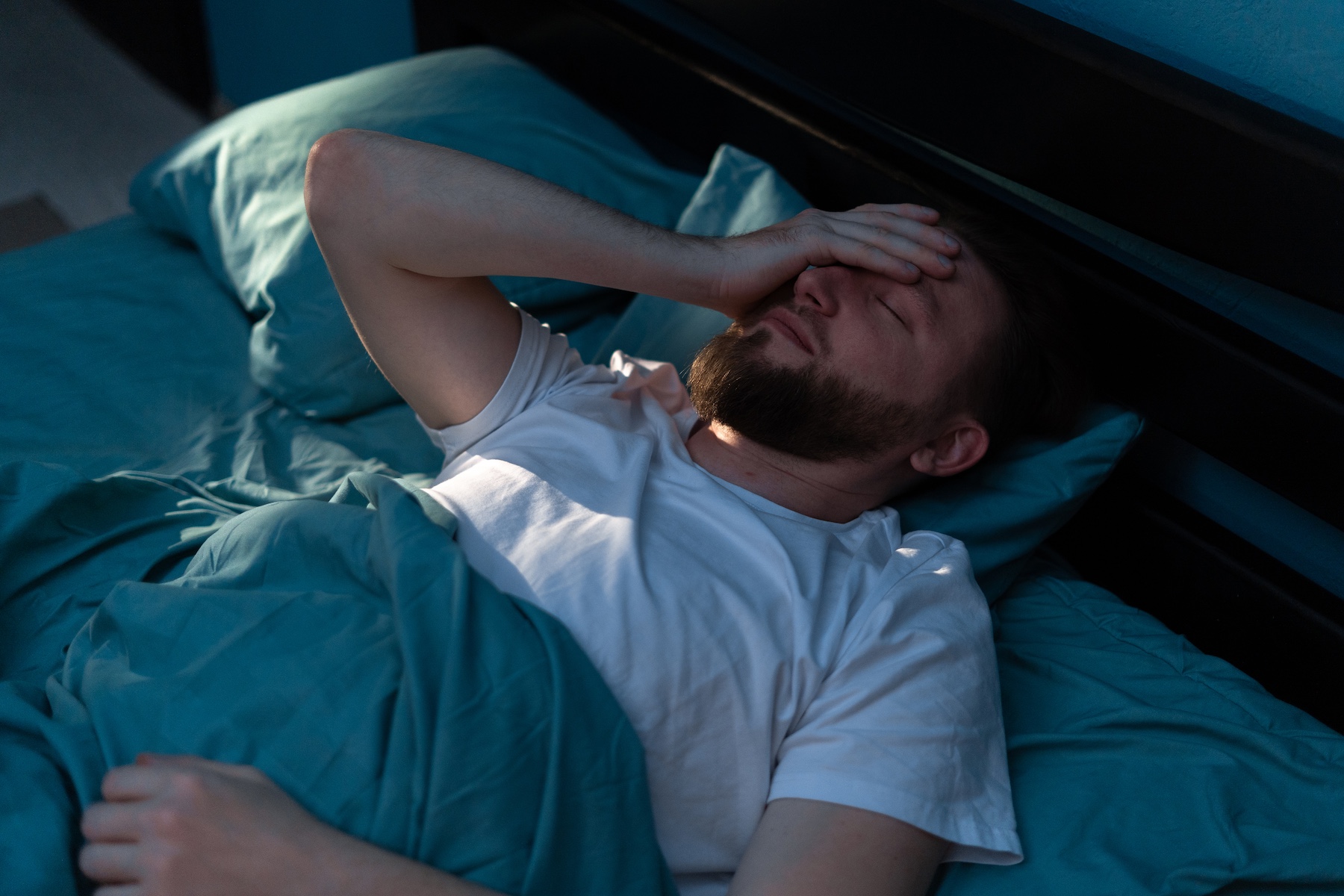
Your nervous system is doing its job, just at the wrong time.
Instead of powering down, it’s treating sleep like a threat.
Doesn't make sense, right? But that's exactly what happens when your fight-or-flight response activates during the night. Research shows 30-40% of adults with chronic insomnia experience this. Your autonomic nervous system—which should be helping you rest—is instead treating sleep like a threat. Stress hormones flood your system. You jolt awake.
Sleep anxiety drives much of this dysfunction. When you've had enough bad nights, your brain starts associating bed with stress. Sleep anxiety transforms bedtime into something your body wants to escape from. The cruel irony? The fear of sleeplessness is what perpetuates sleeplessness.
Your sympathetic nervous system runs the whole fight-or-flight show. Adrenaline. Cortisol. The works.
During sleep, this system should basically be quiet. That's when the parasympathetic side—your "rest and digest" mode—should take over.
But chronic stress? It completely throws this off. Cortisol stays elevated overnight, keeping you in this low-grade state of alert that shreds your sleep quality. Sleep anxiety piles on by adding psychological stress to an already problematic hormonal situation. There are strategies that help, though they're not always obvious.
Sleep anxiety's basically your brain learning to fear sleep itself.
You start anticipating sleeplessness. The cognitive hyperarousal ramps up as bedtime gets closer. Your brain's literally wiring itself to associate bed with stress instead of rest. Not ideal.
The whole pre-sleep routine becomes fraught. Your amygdala fires up even though there's zero actual danger present. Sleep anxiety triggers arousal at the exact moment your body should be powering down. You've got to break these patterns if you want to get anywhere.
Dr. Suzanne Gorovoy, a Clinical Psychologist and Behavioral Sleep Medicine Specialist, nails it: "Sleep anxiety creates vicious cycles of hyperarousal."
Translation? Worrying about sleep prevents the relaxation you need for sleep. Sleep anxiety becomes the core issue.
Here's how cortisol's supposed to work. It peaks in the morning when you wake up, then gradually drops through the day.
Chronic stress flips this. You end up with cortisol surges during what should be sleep hours. These surges trigger spontaneous awakenings.
Your body just won't stand down. Sympathetic activation stays high, blocking the deep restorative sleep you desperately need. Natural approaches can help more than you'd expect.
Sleep apnea makes breathing stop. Repeatedly.
Each time oxygen dips, arousal kicks in. Your brain detects trouble and slams the panic button to restart breathing. These micro-awakenings wreck sleep continuity. You might experience dozens—or even hundreds—per night without remembering a single one. Over weeks and months, this creates massive sleep debt plus serious cardiovascular strain. Catching sleep apnea symptoms early matters way more than people realize.
Periodic limb movement disorder's similar. Your legs jerk involuntarily, triggering brief arousals. You don't fully wake, but your cortex still activates. The sympathetic system fires each time. Sleep debt accumulates slowly.
Hyperthyroidism cranks your metabolic rate way up. Too much thyroid hormone keeps you aroused, making sustained sleep tough. Heart palpitations and anxiety usually come along for the ride.
Cardiovascular issues trigger nighttime arousals too. Paroxysmal nocturnal dyspnea means suddenly gasping for air during sleep. Not fun. Cardiac irregularities generate arousal as your body scrambles to regulate itself. Sleep-related breathing issues need proper workup.
There's this study in Sleep Medicine Reviews that measured 24-hour metabolic rates in insomnia patients versus controls.
Results? Insomnia patients showed way higher energy expenditure during both waking and sleep. This proves hyperarousal isn't just a nighttime thing. It runs 24/7.
Chronic insomnia is persistent physiological activation. Sleep anxiety feeds this hypermetabolic state by reinforcing cognitive plus physical arousal. Self-perpetuating cycle. The researchers said you can't just drug insomnia into submission. You've got to address the underlying hyperarousal. CBT-I goes after this directly.
The locus coeruleus sits in your brainstem. Produces norepinephrine. This neurotransmitter's job is keeping you wakeful and alert.
Problem: when it's hyperactive, you stay vigilant during what should be sleep time. Stress and anxiety pump up noradrenergic activity. In healthy people, norepinephrine drops substantially at sleep onset—that's what lets your brain stop monitoring the environment. When this system won't quit, sleep stays fragmented and unrestorative.
Dr. Michael Grandner, Professor of Neuroscience and Physiological Sciences, puts it simply: "Norepinephrine activity must decrease for consolidated sleep."
No decrease? Fragmented sleep.
The orexin system's also key here. Orexin neurons promote wakefulness and stabilize consciousness. When orexin signaling goes off the rails, you get inappropriate arousal during sleep. These neurons react to emotional stimuli and stress. Direct pathway from psychological factors to messed-up sleep biology. Sleep restriction therapy can regulate these systems.
Sleep anxiety manifests in multiple ways.
Pre-sleep worry activates your brain's threat-monitoring regions. Beta wave activity increases during sleep attempts. This shows ongoing cognitive processing when you should be transitioning to sleep-appropriate neural patterns. Sleep anxiety maintains this wrong kind of activation. People with severe sleep anxiety show persistent arousal even after falling asleep—contributing to lighter, choppier sleep all night long.
Then there's the physical component. Muscle tension stays elevated in people with sleep-related anxiety. Unconscious fight-or-flight preparation. Your body's ready for action despite zero threats present. Tension progressively builds through the evening, peaking right around bedtime. Specific interventions help with sleep anxiety.
There's also attentional bias. You become hypervigilant to any sensation suggesting wakefulness. This selective attention perpetuates arousal by reinforcing your perception that sleep's difficult. Feedback loops everywhere—heightened awareness of arousal increases actual physiological arousal. Clock-watching makes everything worse.
Dr. Areti Vassilopoulos, Pediatric Health Psychologist and Assistant Professor, explains it: "Sleep anxiety develops through learned associations."
Conditioning kicks in when initial sleep difficulties create anticipatory anxiety. More you experience sleep anxiety, stronger these associations become. Breaking patterns requires restructuring thoughts.
Cognitive Behavioral Therapy for Insomnia tackles the hyperarousal that maintains sleep disturbances. CBT-I beats medications in outcomes, especially long-term.
The therapy targets cognitive plus behavioral factors. Sleep restriction and stimulus control cut down sleep anxiety. Cognitive restructuring addresses distorted beliefs about sleep. You learn actual techniques for managing anxiety and restoring natural sleep patterns. Sleep Reset delivers CBT-I effectively.
Relaxation techniques dial down sympathetic activation. Progressive muscle relaxation decreases arousal by systematically releasing tension. Diaphragmatic breathing activates parasympathetic responses. Regular practice builds real stress resilience.
Addressing underlying medical conditions? Essential. Sleep apnea treatment with CPAP eliminates respiratory arousals. CPAP normalizes autonomic function by preventing oxygen desaturations. Treating thyroid or cardiovascular issues cuts down nocturnal arousal. Comprehensive sleep health means considering everything.
Chronotherapy regulates screwed-up circadian rhythms. Timed light exposure strengthens circadian signals, which reduces nighttime arousal by promoting appropriate timing. Morning bright light advances your sleep phase. Optimizing circadian rhythm actually works.
Stress management interventions address cortisol dysregulation. Mindfulness-based stress reduction decreases HPA axis reactivity. (That's hypothalamic-pituitary-adrenal axis—the stress response system.) Regular practice lowers baseline arousal, making spontaneous awakenings less frequent. These techniques also diminish sleep anxiety. Approaches for sleep maintenance insomnia tackle multiple factors at once.
Sleep medications provide temporary relief. They don't fix underlying hyperarousal. Benzodiazepines suppress REM sleep and alter sleep architecture. Long-term use? Dependency. Understanding medication risks helps you make informed choices. Non-drug interventions get at root causes.
Exercise timing matters for sleep quality. Regular physical activity reduces anxiety and improves sleep continuity. But vigorous exercise within three hours of bedtime can increase arousal. Morning or afternoon exercise works better. How exercise and sleep interact requires some thought.
Nocturnal fight-or-flight activation comes from interconnected factors.
Sleep anxiety creates cognitive and physical arousal that keeps you awake. Chronic stress disrupts cortisol rhythms, maintaining sympathetic dominance during sleep. Medical conditions like sleep apnea trigger defensive responses.
Hyperarousal in chronic insomnia reflects system-wide dysregulation. Neurotransmitter imbalances. Hormonal irregularities. Autonomic dysfunction. All creating persistent wakefulness. Sleep anxiety amplifies everything by layering psychological stress onto physiological vulnerabilities.
Treatment means addressing underlying mechanisms, not just symptoms. CBT for Insomnia targets the factors keeping this going. If you're curious to learn about how CBTI works, read more here! Stress reduction modulates autonomic balance. Treating coexisting conditions eliminates additional triggers. Comprehensive sleep programs bring these approaches together.
Understanding fight-or-flight mechanisms gives you a foundation for recovery. Sleep anxiety responds well to structured behavioral interventions. Professional sleep coaching walks you through evidence-based strategies. With appropriate treatment, your body can relearn proper sleep-wake regulation and restore normal arousal patterns.
Note: This article provides educational information about sleep-related fight-or-flight responses. It's not a substitute for professional medical advice, diagnosis, or treatment. Consult qualified healthcare providers about sleep disturbances, particularly when accompanied by cardiovascular symptoms or breathing difficulties. Persistent nocturnal awakenings need comprehensive medical evaluation.
.png)
Dr. Neel Tapryal
Dr. Neel Tapryal is a medical doctor with extensive experience helping patients achieve lasting health and wellness. He earned his medical degree (MBBS) and has worked across hospital and primary care settings, gaining expertise in integrative and preventive medicine. Dr. Tapryal focuses on identifying and addressing the root causes of chronic conditions, incorporating metabolic health, sleep, stress, and nutrition into personalized care plans. Driven by a passion for empowering patients to take control of their health, he is committed to helping people live with greater energy and resilience. In his free time, he enjoys traveling, outdoor adventures, and spending time with family and friends.

Fax: +1 (984) 888-8385
Email: help@thesleepreset.com