.jpg)
Loud snoring can be more than just a nighttime annoyance; it can be a primary indicator of obstructive sleep apnea (OSA), a serious condition where breathing repeatedly stops and starts throughout the night. It is estimated that a staggering 80% of sleep apnea cases go undiagnosed, leaving millions at risk for long-term health consequences [3].
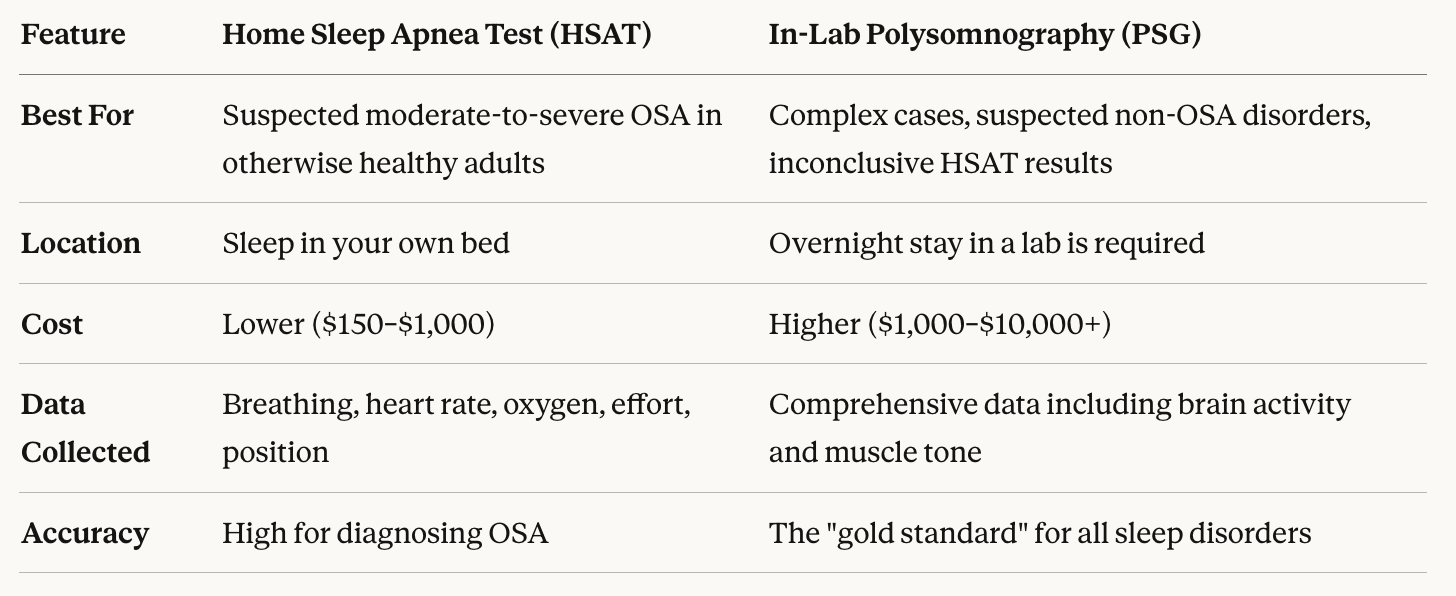
In the past, diagnosing this condition required an overnight stay in a specialized sleep laboratory. While this in-lab study, known as polysomnography (PSG), remains the gold standard for complex cases, many people can now get an accurate diagnosis from the comfort of their own bed using a home sleep apnea test (HSAT).
Deciding between these two options can feel overwhelming. This guide will walk you through the differences, benefits, and potential drawbacks of each to help you determine which sleep apnea test is right for you.
For individuals with straightforward symptoms pointing to moderate or severe obstructive sleep apnea and no other significant medical issues, a home sleep apnea test is a clinically validated and convenient diagnostic tool. In fact, many patients prefer it, with one recent review finding 56% of patients favored home testing over in-lab studies [4].
The primary advantage of an HSAT is convenience. You can complete the test in your own bed, on your own schedule, which often leads to a more typical night's sleep. This option is also significantly more affordable, with costs generally ranging from $150 to $1,000, whereas in-lab studies can cost several thousand dollars [6].
At Sleep Reset, we simplify this process by shipping an FDA-cleared home sleep test directly to your door. The device is small, lightweight, and easy to use. It typically includes:
After one night of use, the data is uploaded and reviewed by a board-certified sleep physician to provide a diagnosis and recommend next steps.
While highly effective for diagnosing OSA, HSATs are not for everyone. They are generally not recommended for individuals with significant pre-existing conditions like severe COPD, congestive heart failure, or neuromuscular disorders.
Furthermore, home tests primarily screen for sleep-disordered breathing. They cannot definitively diagnose other sleep disorders like narcolepsy, periodic limb movement disorder, or central sleep apnea, as they do not monitor brain activity. There is also a small risk of technical failure (e.g., a sensor falling off), which has a pooled rate of about 7.8% [5]. If an HSAT comes back negative but your symptoms strongly suggest a sleep disorder, your physician may recommend a follow-up in-lab study.
An in-lab sleep study, or polysomnography (PSG), is the most comprehensive diagnostic tool available. It is the best choice if you have a complex medical history or if your doctor suspects a sleep disorder other than obstructive sleep apnea.
During a PSG, you will spend the night in a private room at a sleep center or hospital. A trained technician will attach a variety of sensors to your body to monitor multiple physiological parameters, including:
This detailed data allows physicians to get a complete picture of your sleep architecture and diagnose a wide range of sleep disorders with high precision. If sleep apnea is detected early in the night, the technician may initiate a "split-night study" by fitting you with a CPAP machine to determine the optimal pressure setting for treatment.
The main drawbacks of a lab study are cost and inconvenience. Sleeping in an unfamiliar environment while connected to numerous wires can be uncomfortable and may not reflect a typical night's sleep [2]. In-lab studies are also expensive, with out-of-pocket costs potentially reaching $5,000 or more [6].
After your test, a sleep specialist will analyze the data to determine a diagnosis. The two most important metrics for sleep apnea are the Apnea-Hypopnea Index (AHI) and blood oxygen saturation.
The AHI value is used to classify the severity of sleep apnea:
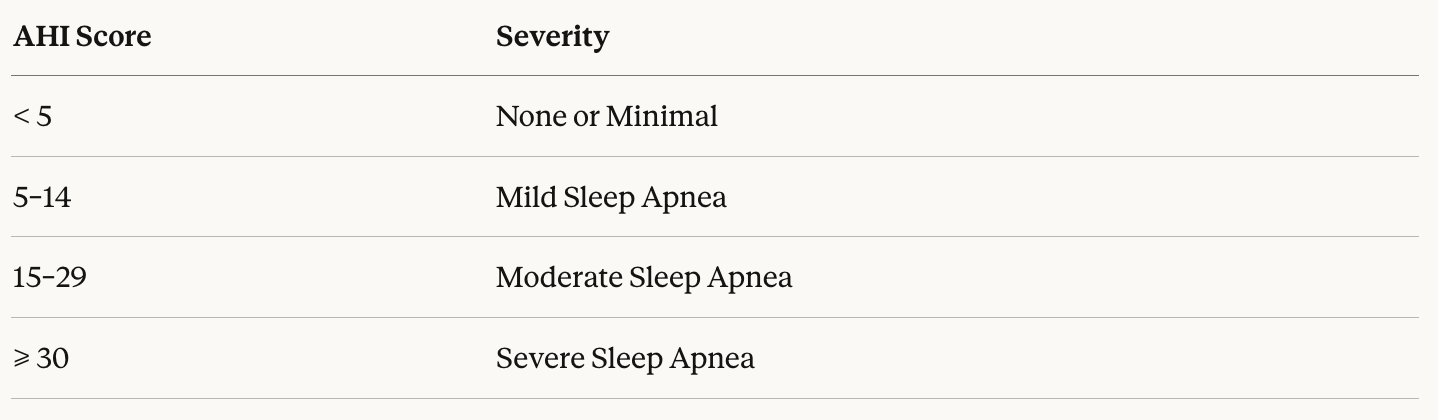
It's important to note that an AHI from a home test may differ slightly from a lab test. A PSG calculates AHI using total sleep time confirmed by brainwave activity, while an HSAT uses the device's total recording time. This can sometimes result in a lower (underestimated) AHI on a home test [1]. However, for most patients with suspected OSA, an HSAT provides a sufficiently accurate diagnosis.
Choosing between a home and lab sleep study depends on your specific symptoms, medical history, and physician's recommendation. For many individuals, an HSAT is a cost-effective and convenient first step that provides a reliable diagnosis for obstructive sleep apnea.
Ultimately, getting tested is the most important step toward better sleep and better health. Whether you're in Baltimore or anywhere else in the country, diagnosing and treating sleep apnea can significantly improve your quality of life.
The Sleep Reset program offers a complete solution, from convenient at-home testing to personalized treatment plans guided by board-certified clinicians. Once diagnosed, Sleep Reset provides comprehensive sleep apnea treatment options including Oral Appliance Therapy and CPAP ordering, all integrated with our proprietary CBT-I program if you also experience insomnia.
Our integrated treatment model means you don't have to juggle multiple providers or fragmented care. Whether you're experiencing loud snoring, daytime fatigue, waking up gasping for air, or middle-of-the-night awakenings, Sleep Reset provides the comprehensive care you need.
If you're ready to stop wondering and start sleeping better, take the first step today.
Get diagnosed and treated with Sleep Reset:
.png)
Dr. Neel Tapryal
Dr. Neel Tapryal is a medical doctor with extensive experience helping patients achieve lasting health and wellness. He earned his medical degree (MBBS) and has worked across hospital and primary care settings, gaining expertise in integrative and preventive medicine. Dr. Tapryal focuses on identifying and addressing the root causes of chronic conditions, incorporating metabolic health, sleep, stress, and nutrition into personalized care plans. Driven by a passion for empowering patients to take control of their health, he is committed to helping people live with greater energy and resilience. In his free time, he enjoys traveling, outdoor adventures, and spending time with family and friends.

Fax: +1 (984) 888-8385
Email: help@thesleepreset.com