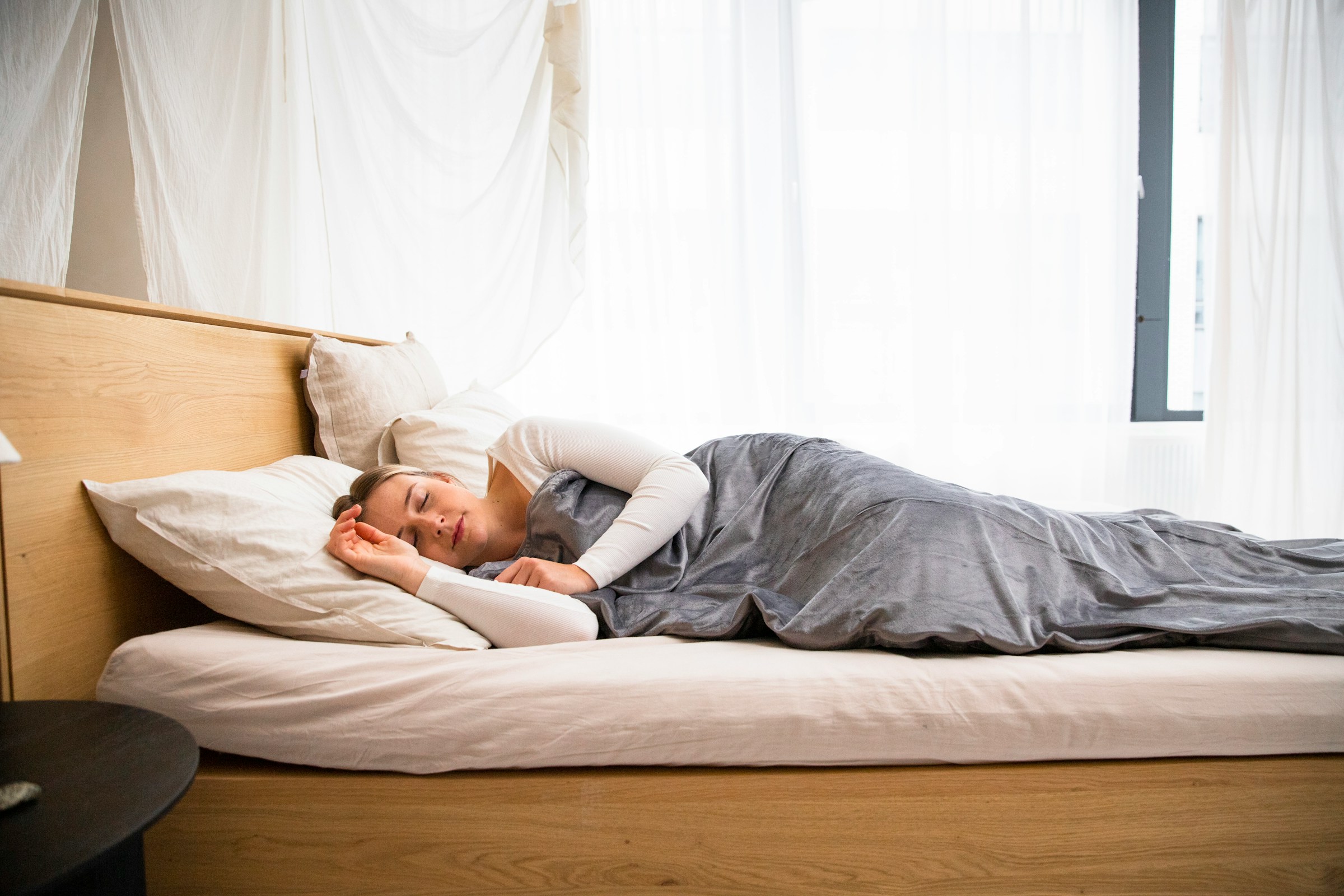
Lying awake, staring at the ceiling, and watching the hours tick by is a frustratingly common experience. For millions of people, this isn't just an occasional bad night—it's the chronic reality of insomnia. As the most prevalent sleep disorder, insomnia can stem from various sources, including medical conditions, anxiety, poor sleep habits, or chronic pain. In the United States, about one-third of adults report getting less than the recommended amount of sleep, sending many on a desperate search for relief [4].
While many turn to sleeping pills, these often provide only a temporary fix and can come with side effects like grogginess and dependency. This has led many to explore alternative, non-pharmacological treatments. Among them, hypnotherapy is gaining attention as a potential tool for reclaiming a good night's sleep.
Contrary to its portrayal in movies, clinical hypnosis is not about mind control. It is a therapeutic technique that guides you into a state of deep relaxation and focused attention [3]. In this state, the mind may become more open to suggestions aimed at changing unhelpful thoughts and behaviors.
For insomnia, a hypnotherapist might use suggestions designed to:
The goal isn't to make you fall asleep during the session but to equip you with mental tools to calm your nervous system and fall asleep more easily on your own [5].
Research into hypnotherapy for sleep issues shows promising, albeit developing, results.
While these findings are encouraging, experts emphasize that the overall body of research has limitations, such as small sample sizes and inconsistent methods. More high-quality studies are needed to fully understand its effectiveness and for whom it works best [2]. Hypnotherapy is a tool that may help some people, but it is not a universally guaranteed solution for insomnia [1].
While hypnotherapy shows potential as a complementary therapy, the medical community agrees that the most effective, science-backed, and long-term solution for chronic insomnia is Cognitive Behavioral Therapy for Insomnia (CBT-I). Leading medical organizations, including the American College of Physicians, recommend CBT-I as the gold standard medical treatment for insomnia.
Unlike treatments that only soothe symptoms, CBT-I addresses the underlying thoughts and behaviors that perpetuate sleep problems. It's a structured program that retrains your brain and body for healthy sleep. While some studies explore combining methods like hypnosis and CBT, CBT-I on its own has the most robust evidence for providing lasting relief without medication.
At Sleep Reset, our entire program is built on the principles of CBT-I, delivered through a convenient digital platform with the support of licensed clinicians and sleep coaches. We focus on treating the root causes of your sleep issues so you can achieve sustainable, natural sleep.
Lying awake, staring at the ceiling, watching the hours tick by—this frustratingly common experience isn't just an occasional bad night for millions of people. It's the chronic reality of insomnia. As the most prevalent sleep disorder, insomnia can stem from various sources including medical conditions, anxiety, poor sleep habits, or chronic pain. In the United States, approximately one-third of adults report getting less than the recommended amount of sleep, sending many on a desperate search for relief.
While many turn to sleeping pills, these often provide only temporary fixes and come with side effects like grogginess and dependency. This has led many to explore alternative, non-pharmacological treatments. Among them, hypnotherapy is gaining attention as a potential tool for reclaiming a good night's sleep. But does hypnosis actually help with sleep problems?
Contrary to its portrayal in movies, clinical hypnosis is not about mind control. It is a therapeutic technique that guides you into a state of deep relaxation and focused attention. In this state, the mind may become more open to suggestions aimed at changing unhelpful thoughts and behaviors.
For insomnia, a hypnotherapist might use suggestions designed to:
The goal isn't to make you fall asleep during the session but to equip you with mental tools to calm your nervous system and fall asleep more easily on your own.
Research into hypnotherapy for sleep issues shows promising, albeit developing, results. A systematic review of hypnosis and sleep quality found:
Some Positive Findings:
Significant Limitations:
While these findings are encouraging, experts emphasize that the overall body of research has limitations. More high-quality studies are needed to fully understand its effectiveness and for whom it works best. Hypnotherapy is a tool that may help some people, but it is not a universally guaranteed solution for insomnia.
While hypnotherapy shows potential as a complementary therapy, the medical community agrees that the most effective, science-backed, and long-term solution for chronic insomnia is Cognitive Behavioral Therapy for Insomnia (CBT-I). Leading medical organizations, including the American College of Physicians, recommend CBT-I as the gold standard medical treatment for insomnia.
Unlike treatments that only soothe symptoms, CBT-I addresses the underlying thoughts and behaviors that perpetuate sleep problems. It's a structured program that retrains your brain and body for healthy sleep. While some studies explore combining methods like hypnosis and CBT, CBT-I on its own has the most robust evidence for providing lasting relief without medication.
At Sleep Reset, our entire CBT-I-based program is delivered through a convenient digital platform with the support of licensed clinicians and sleep coaches. We focus on treating the root causes of your sleep issues so you can achieve sustainable, natural sleep.
Understanding how different treatments work helps you make informed decisions about your sleep health:
Cognitive Behavioral Therapy for Insomnia (CBT-I):
Hypnotherapy:
Sleeping Pills:
Learn more about how CBT-I compares to sleeping pills and why CBT-I is preferred over medication.
Insomnia is complex. It can be a symptom of an underlying issue like sleep apnea or be tangled with anxiety that triggers your fight-or-flight response at night. That's why a comprehensive approach is critical.
Sleep Reset provides a full-circle care model. We start with a thorough assessment to understand your unique situation. If needed, we can provide home sleep testing to rule out other disorders like:
Then, our team of sleep experts creates a personalized CBT-I program to guide you back to restful nights. A peer-reviewed study of our program showed participants:
Our program effectively treats:
Hypnotherapy may offer hope and relief for some, but for those seeking a proven, durable solution grounded in medical science, CBT-I remains the most reliable path.
If you're tired of sleepless nights and ready for real relief, it may be time to explore a program that's clinically validated to work.
CBT-I offers advantages hypnotherapy cannot:
If you're ready to move beyond temporary fixes and unproven therapies, here's what works:
Start with proven sleep hygiene improvements:
Explore evidence-based sleep therapy options:
Looking for natural sleep remedies? Consider these evidence-based approaches:
Sleep Reset makes expert sleep care accessible to everyone, regardless of location. Whether you're looking for sleep treatment in California, New York, Texas, Florida, or anywhere else, we offer treatment by state nationwide.
Real members share their experiences:
"I tried everything—including hypnosis tapes I found online. Nothing worked until I started CBT-I with Sleep Reset. My coach helped me understand why I couldn't sleep and gave me tools that actually fixed the problem."
"After years of waking up tired, I finally have energy again. The program taught me sustainable habits, not quick fixes."
"I was skeptical about whether CBT-I would work, but within a month I was sleeping through the night for the first time in years."
Read more success stories from members who've transformed their sleep.
If you're ready to move beyond temporary fixes and find a lasting solution, talk to a sleep expert and see if our personalized, science-backed program is right for you.
Take our comprehensive sleep assessment to discover:
Stop experimenting with unproven therapies. Start with what actually works. Better sleep isn't about trying every alternative approach—it's about using proven methods that deliver lasting results.
Insomnia is complex. It can be a symptom of an underlying issue like sleep apnea or be tangled with anxiety that triggers your fight-or-flight response at night. That's why a comprehensive approach is critical.
Sleep Reset provides a full-circle care model. We start with a thorough assessment to understand your unique situation. If needed, we can provide home sleep testing to rule out other disorders. Then, our team of sleep experts creates a personalized CBT-I program to guide you back to restful nights. A peer-reviewed study of our program showed participants fell asleep in half the time and spent 41% less time awake at night.
Hypnotherapy may offer hope and relief for some, but for those seeking a proven, durable solution grounded in medical science, CBT-I remains the most reliable path. If you're tired of sleepless nights and ready for real relief, it may be time to explore a program that's clinically validated to work.
If you're ready to move beyond temporary fixes and find a lasting solution, talk to a sleep doctor and see if our personalized, science-backed program is right for you.
.png)
Dr. Neel Tapryal
Dr. Neel Tapryal is a medical doctor with extensive experience helping patients achieve lasting health and wellness. He earned his medical degree (MBBS) and has worked across hospital and primary care settings, gaining expertise in integrative and preventive medicine. Dr. Tapryal focuses on identifying and addressing the root causes of chronic conditions, incorporating metabolic health, sleep, stress, and nutrition into personalized care plans. Driven by a passion for empowering patients to take control of their health, he is committed to helping people live with greater energy and resilience. In his free time, he enjoys traveling, outdoor adventures, and spending time with family and friends.

Fax: +1 (984) 888-8385
Email: help@thesleepreset.com